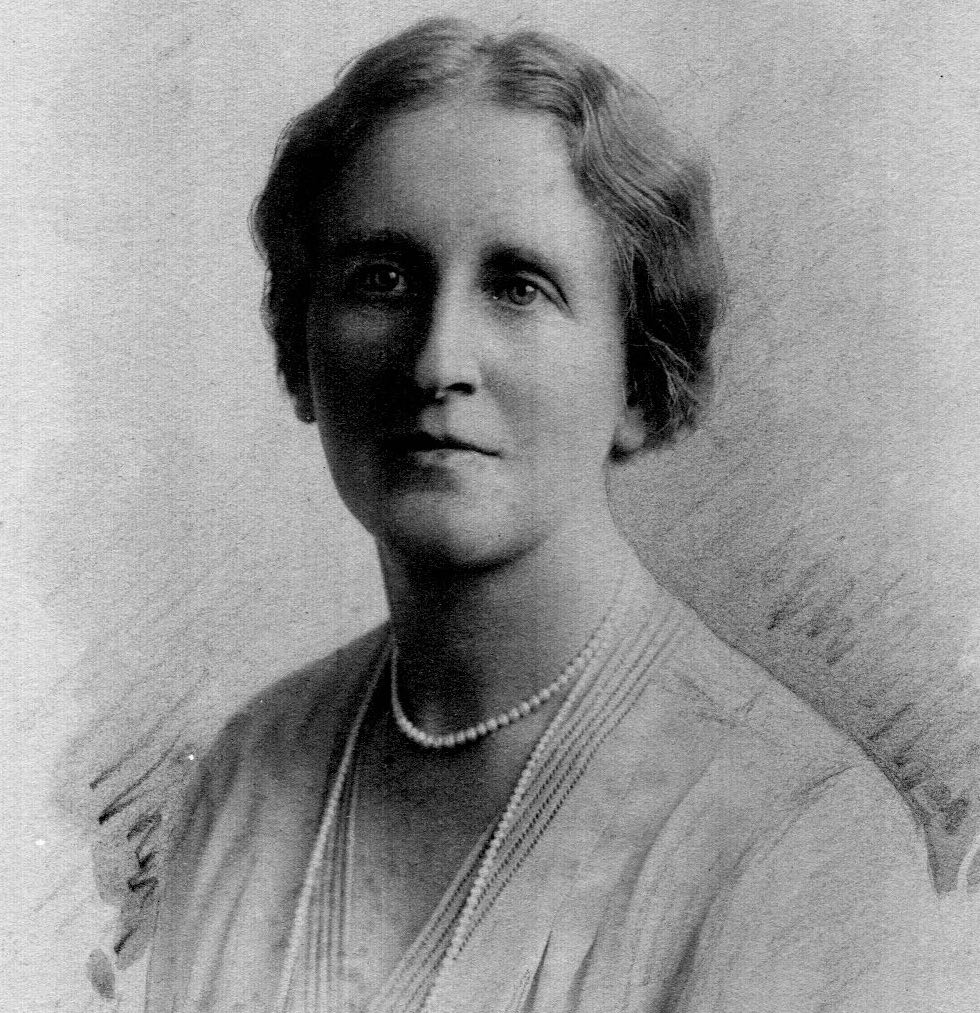
Thursday, 1 March 2018

Portrait of Richard Henry Beaumont of Whitley (d.1810)

Amongst the portraits is this one:

The label reads:-
Richard Henry Beaumont F.S.A.
Whitley, Yorks.
Obit 1810

For a long time, I thought it was rather odd that our side of the family should have a portrait of this gentleman. We do not have a portrait of our ancestor Richard Beaumont of Birmingham (1761-1828) and so I thought it might be him, and part of the muddle about his middle name, touched on in a recent piece here. It is an unassuming portrait, not a grand one, and I thought - a Beaumont of Whitley would be grander than this.

Now, however, on balance I think the label is correct.

So who was R.H. Beaumont of Whitley, and why would we have ended up with a portrait of him? Here goes.

First here is how he was related to us:- his aunt Frances Beaumont 1704-1735 (one of his father's sisters) married our George Beaumont of Darton, so he was first cousin of the clergyman of St.Nicholas.

Now R.H. Beaumont FSA (Fellow of the Society of Antiquaries) (I will call him RHB) was born in 1749 making him five years older than his first cousin once removed Thomas Beaumont the clergyman (Thomas here), and in looking at the portrait I think we would say that the style of it is about 1800, and fits with a person of that age.

The picture has been attributed to the well-known artist Sir William Beechey, and whilst I am not a great believer in valuers' attributions, that is possible.

Also we do know that RHB and Thomas knew each other. Their acquaintance must have begun by 1793 the year in which RHB served as High Sheriff (of Yorkshire) and Thomas was appointed the chaplain of the 84th Regiment, whose Colonel was RHB's brother-in-law George Bernard.

This is about the time when Thomas sold his estate at Chapelthorpe and built his own house at East Bridgford. We know that RHB visited Thomas, as he wrote a letter saying that he had had "an unpleasant ride home" and sending "comps" to the ladies (papers in Box 1). I think that was in the 1790s and that he had stayed with Thomas at Chapelthorpe.  He also sent an elaborate and accurately-written family tree which demonstrated that he, should there be any doubt, was the rightful owner of Whitley, with its vast rent income. 

RHB's sister was called Elizabeth. In 1774 when aged 21 she had married the Anglo-Irish Army officer George Bernard, and they had a house called Heaton Lodge on the edge of the Whitley estate, near Colne Bridge in the Calder valley. 

RHB had many portraits in his house (Whitley Hall), and as part of his antiquarian pursuits he labelled them on the back, typically writing in black ink on the wood itself, the back of the frame. I have one that is marked in that way, but the picture in question is not. Moreover another picture, said to be of him, and said to have come from Whitley, and to be by Romney, was sold in London in 1932. Why would he have had two pictures of himself in his house?

There seems no likelihood, given the way Whitley Hall devolved after RHB died (in 1810) of any of the contents coming to our side of the family, and yet it looks very much as though the picture has belonged in our family since soon after that date. 

I now suspect that this picture came not from Whitley Hall, but from Heaton Lodge, and here is why:

Elizabeth Bernard died in 1814. The Bernards had had no children, and perhaps were not living together (a letter dated 1811 shows George at Filey (Box 1/129)). He had an acquaintance called Elizabeth Proctor, who with one Frances (Fanny) Gray - evidently his daughter, but not by his wife - were the main beneficiaries under his will and codicils (PROB 11/1631/418).

George Bernard died in May 1820, and the contents of Heaton Lodge were soon being sold.

Leeds Mercury and other papers, from Sept. 1820
Quite possibly Rev. Thomas Beaumont - now of East Bridgford - bought some things either privately or at the auction. I can see it suiting him to have a portrait of a man he remembered and respected, who was also a Yorkshire aristocrat and quite closely related to him.

On the back of our picture as already noted there is nothing that appears to have been written by RHB. What there is, apart from some modern labels, is an old paper label reading "[blank, torn off] Henry Beaumont F.S.A., Whitley [more, too faint to read]" and a less old label reading "R.H. Beaumont."


The label screwed to the front of the frame is in the same style as on a number of other pictures and merely tends to confirm that this one was in the same house as those others (i.e. East Bridgford Hill).

In 2015 I offered this picture (and others) on loan to RHB's "local" museum and gallery, Kirklees. Their curator was interested, but said the budget cuts prevented that.

I deposited photographs of this and other pictures with Nottinghamshire Archives in 1998 or 1999 (this one:- DD/2126/1/3).

As a postscript to the above:
My uncle once told me that one of the family portraits, showing a man in a red coat who was thought to be General Bernard, had gone missing. This raises the possibility that Thomas bought not one, but two pictures from Heaton Lodge.

This note dated 1 March 2018


Monday, 26 February 2018

Richard Beaumont of Birmingham - as Captain

The previous piece explained that Richard being a Captain in the 84th Regiment is wrong, based on the document appointing his brother as Chaplain having been misunderstood and indeed written over.

So was he a Captain at all? Yes he was.

Richard was first of all commissioned an "Ensign" in the Derbyshire Militia. That was in 1782 when he was 21 (original document in this Archive, Box 1/121; see this blog, 27 Jan.2014).

He then went to make his home in Birmingham but it seems did not give up his links with Derby, as in June 1789 he was made up to Lieutenant "additional to the Light Company" (still Derbyshire Militia) with effect 27 April (London Gazette 23 June 1789 page 455; Derby Mercury 25 June 1789).


This is part of a view of Birmingham looking from southwest to northeast. It depicts the town
as it was when St.Phillips church (upper left) was quite new (from Langford, vol. 2, frontispiece,
and said there to be drawn by J & N Buck, 1731).
Perhaps during the late 1790s or c.1800 Richard and his family moved from the centre of Birmingham to the new suburb of Ashted, where there was a Barracks. He was appointed a Captain in the First Battalion of the Loyal Birmingham Infantry. That was in October 1803 (London Gazette 8 October 1803 page 1380; Langford, A Century of Birmingham Life, 2nd Edition, 1871, vol. 2, page 291).

He was appointed a Captain in the Second Regiment of Local Militia, Warwickshire, on 24 September 1808 (original document in this Archive, Box 1/123) (London Gazette 9 September 1809 p.1455)(confirming date 24 Sep 1808).
Box 1/123

(All officers of the rank of Captain and above were designated Esquire)
(Please note the absence of any middle name)

This note made 26 February 2018


The Beaumont Family Tree - some errors

A Family Tree was printed in about 1873.

I can say that it was about then because it says nothing about things later than that.

It has been widely followed, so that information from it now appears in Burke's Peerage and in certain online resources such as Darryl Lundy's "peerage" website.

There are some errors in the 1873 Family Tree, and these have thus become "hallowed" by repetition!

The Family Tree must have been compiled based on information from the various heads of family at the time. One of those being George Beaumont 1796-1882. This note picks up some errors for which I fear he is either responsible - or which he didn't spot.

From the 1873 Family Tree, about George (partly cut off
in crease!), his father, and his brother.

Error no. 1 - His father's military role

Of George's father, the 1873 Family Tree says "Capt., 84th Regt."

This has been widely copied. It is entirely wrong.

Richard had the rank of Captain but not in the 84th Regiment. Richard's brother Thomas however was the Chaplain to the 84th Regiment.

This archive contains a document appointing Thomas as the chaplain (Box 18/304). The document was rather crudely altered by someone so as to make "T.Beaumont, clerk" look like "R.Beaumont, gent." and to alter "Chaplain" to "Captain."

Extract from altered appointment of T[homas] Beaumont, clerk, as
chaplain to 84th Regiment, 1793 (Box 18/304)
See how the "l" in Chaplain has been crossed to make it a "t" and the "Ch" has been blotted out with a large "C."  Presumably it was George who did this but can anyone say why?

This document is dated 2 November 1793. A published list of the Officers of the 84th Regiment of Foot shortly after this shows four Captains, none of whom are called Beaumont, but T.... Beaumont, clerk, as the Chaplain (London Gazette, issue 13627, page 180). Rev. Thomas Beaumont knew the Colonel of the 84th, George Bernard. This is to be considered in a later piece,

Error no. 2 - George's father's middle name

The 1873 Family Tree states "Richard Henry Beaumont, of Aston, co. Warwick." This also has been widely copied, and is equally wrong insofar as it gives him a middle name. No earlier sources of information have come to light giving Richard any middle name. Someone seems to have invented this and I can only think that the error arose because Richard was one of several brothers, of whom the fourth was Richard and the fifth was called Henry.

George had apparently given his own son Richard the middle name Henry, but that is hardly the point!

If George supplied information to the compilers of the Family Tree, he might have been confused by various documents which list the brothers in order:- Thomas George William Richard Henry Walter Abel....  The Family Tree not only states "Richard Henry" but also gets the order wrong.

So I will resume the sequence of births of all the siblings, noting "FT1" for the order of the sons given in the 1873 Family Tree:-

Thomas (1754-) (FT1)
Frances (1756-)
George (1757-) (FT2)
William (?1758-) (died no later than 1796) [not in the FT]
Richard (1761-) (FT3)
Henry (1762-) (died in early 1785) (FT5)
Charlotte (1765-
Walter (1767-) (FT4 and FT6) [yes, Walter is in the FT twice]
Abel (1772-) (FT7)

Possible Error No. 3 - George's mother

The 1873 Family Tree shows Richard's wife, the mother of George himself and of his brother Henry, as "Ann, daughter of William Walford, of Penn Bank, co. Stafford.. mar. 1795." This has been widely copied.

Ann was indeed the name of a daughter of William Walford, christened at Penn in 1772. She married Richard Beaumont and survived him as his widow for many years. George of course knew and visited her!

But it is not possible for us to say whether she was George and Henry's mother (or indeed whether George knew if she was his mother), for George and Henry were born many years before she married their father, which was not until 1817. (8 February 2019: see comment below)

The date of 1795 given for the marriage in the Family Tree is conveniently the year before George's birth, and tells us I believe very clearly that that the compilers did not know of Richard having any other wife at the time George and Henry were born (Richard had a first wife who died some time before they were born, a marriage which the 1873 Family Tree omits entirely) (also he had a child in 1815, apparently by a wife called Ann, this child died the same year).


Parish Register entry for marriage of Richard Beaumont to Ann Walford, 15 July 1817
at either Aston parish church or the chapel of St James the Less, Ashted.
He is "widower" and she is "spinster." They are both "of this parish" and
the marriage was by Licence (rather than by Banns).


Error no. 4 - George's address


The 1873 Family Tree shows George as "of Bridgeford Hall, Notts." He lived at Bridgford Hill. This is still wrong in lots of published places, eg sometimes "Bridford Hill."


This note made 26 February 2018.
Comment 8 February 2019: I have now done a longer piece on RB of Birmingham, and that touches on  the first three of the errors noted here. In regard to No.3, it looks to me more likely than not, that Ann Beaumont (nee Walford) was the actual mother of George and Henry. They are expressly described as "my sons" in her Will, for what that is worth.


Sunday, 4 February 2018

Rev George Beaumont's Accounts 1736-1754

This small notebook is a mine of information about George's early life, his inheritance, education, move to Nottingham, and so on.


Here is a sample page

Here is a link to the old transcript, made some years ago and containing a few errors (mea culpa!).
https://drive.google.com/file/d/0BxEJg04fqwkibnlxZk9HU09scUk/view?usp=sharing

(I fear the transcript will display single pages, you may be able to get it to display two pages at at time. The odd number pages are on the left and the even on the right)

The notebook is in this archive Box 1/001. George is "you" in the accounts, as they are addressed to him.

At the end are some notes which I wrote in 1999 and annotated in 2008. There has been some more recent work, for example it is now clear that George went up to Cambridge (Trinity Hall) in April 1742 (he was sixteen). It would seem that he was not given access to his money at that time.

He got married, at Leeds, on 30 July 1753. He had, as the accounts show, been in Yorkshire a few times. In fact he had preached at Chapelthorpe, or in the mother church at Sandal Magna, on more than one occasion including that July. This is shown by notes in the parish register.

The accounts show that he was apt to spend somewhat faster than his income flowed in. Thus it was no doubt very helpful that his uncle Abel Smith, the banker (who knew everyone) fixed him up with a short term curate job at Tollerton (the one near Nottingham, not the one near York) shortly after his marriage.

Here he is, in the portrait which has come down through the family.

I hope to write something about the portraits one day and will just say for now that I begin to suspect that this portrait, and the one of Betty, the young woman he married (both of which are dated 1753) may have been wedding presents from Abel Smith. Who knows?

Sunday, 21 January 2018

Land Tax, Stamp Duty, and Smiths Bank, Nottingham

We know that the banking Smith family of Nottingham were important to the Beaumonts in the eighteenth century. This led me to consider more about the Smiths and their banking business. Again and again I found the surname Bury, and snippets of information about the collection of tax.

Take this with caution please, it is not fully researched (see notes).

Stamp Duty was introduced in the 1690s and one John Bury was appointed the Distributor for the Stamp'd Parchment and Paper, for Nottingham and/or Notts. At this time the local Receiver of Land Tax was Thomas Trueman, one of whose sureties was Samuel Hallowes, of Norton, Derbyshire, and of Nottingham, a Land Tax Commissioner for Nottingham. Mr Hallowes' daughter Frances was Mrs John Bury.
Stamp Duty Act, from a Law Textbook of 1711
Thomas Trueman died and John Bury succeeded him as Receiver in 1697 or 1698, and at some stage - perhaps in 1708 - was himself succeeded as Distributor of Stamps by Richard Smith (who seems not to be related to the bankers).

It was normal for there to be delays in sending tax money to London. Indeed the foundation of the banking business lay in putting it to use locally. Sending cash by road was (or was made out to be) a risky undertaking. Until the practice was found to be unlawful, John Bury and other Receivers had often claimed for the cost of "strong guards and extraordinary charges" and perhaps the genius of the Smiths lay in keeping accounts between London and Nottingham so that the money did not need to be physically sent.

From the death of Thomas Smith (1728) the principal partners in the banking business for the next 20-odd years were Abel Smith in Nottingham and Samuel Smith in London.

(In parenthesis, several of the Beaumonts, the family of Abel's wife Jane, were Land Tax Commissioners in the West Riding of Yorkshire, including her grandfather and father, and the family had experience of collecting tithe money and lending that out - they were, in a sense, Smiths in miniature).

John Bury retired, handing the Receivership over to his son John Bury junior. But in 1732, John junior died, and Mr Bury senior took the role again until his own death six years later. He was buried in St.Mary's Church, Nottingham, close to his house on Short Hill.

The second son William Bury was made Receiver in his father's place. At this time the Land Tax collected annually from Notts and Nottingham was a little short of £30,000, which was banked with the Smiths.

Sometime c.1740-1747 William Bury subscribed for four copies of Charles Deering's proposed History of Nottingham (which was in fact not published until 1750 or 1751). Other subscribers included Abel Smith (a copy for himself and one for Samuel), and Thomas Beaumont [probably Abel's brother-in-law, though not indicated "The Rev." here] (Deering MSS at Bromley House Library).

The old Smiths Bank, South Parade, Nottingham (from Easton)
Mr Bury and Samuel Smith were made Freemen of Nottingham in 1751, but by about that time William had moved to Berkshire where he died in late April or early May 1754, leaving as his widow Ann, a member of the Sherwin family of Nottingham. The next brother was Thomas Bury, who appears to have lived in St.James's, Westminster.

Samuel Smith died in 1751 and there is the impression that during the next few years Abel Smith declined and his sons bickered. It is said that William Bury's account with the Smiths was closed (Leighton-Boyce, p.41). There was a tricky political situation at home. A great deal of "stuff" happened in the early 1750s and I feel sure the Nottingham Bank would have lost some customers. Abel senior died in late 1756, and within a year his sons George and Abel were separating. In a letter in November 1757 Abel said that "Mr Bury" [that can only mean Thomas] was willing to make him his deputy (to JS Charlton, Add Ms.32876 f.79) whilst at the same time George lobbied for the business, claiming that his London cousins were joining him (ibid. f.41r & v) - but did they?

It has been said that George did become the Deputy Receiver of Land Tax but I don't know for how long or what is the evidence at all. Abel was the "most liked" (JS Charlton to Duke of Newcastle, 22 Nov. 1757; Add Ms 3287 f.77r).

In 1758 Abel signed up a new partner, London heavyweight John Payne, and this may have helped to give him the credibility needed. Abel being Deputy Receiver-General of Land Tax for Nottingham and Notts is said to be documented in a "Memorial" of 1767 (Treasury Papers T/1/462/156-157); this is on the get-a-copy list.

Reports about Land Tax in the Treasury Books and Newspapers are often about problems, especially defaults or arrears. For example the inhabitants of a district of Lincolnshire were hit with Land Tax claims 25 years on because their Receiver - a man named Joseph Gace - had defaulted (but he had built a fine house....). Fortunately for the taxpayers, they were able to prove that they had paid. In general there is an absence of stories about Land Tax from Nottingham, which I take as implying that those concerned were running a tight ship - sending money in quicker than some, and not creaming off more than was considered acceptable.
Land Tax Act, 1744. George II c.I
A man dressed in naval uniform arrived at Nottingham and tried to get cash from Smiths Bank on "Bath and Bristol notes" but was refused "for want of a proper Indorser." The man then asked if there was another bank in the town. He got £100 out of Wrights before hastily leaving Nottingham! (Derby Mercury 2 February 1781). This sort of thing is why people trusted Abel Smith.

Thomas Bury also had an office in connection with issuing subpoenas in the Court of Chancery. He died in 1772 (see notes), when his unmarried sister was his executrix. This was Ann Bury, and Notts Archives (DD/138/55) have what seems to be the final sign-off to her for her late brother as the Receiver-General of Land Tax, again for Nottingham and Notts., dated August 1773.

Abigail Gawthern noted that Ann Bury was found dead in her bed in June 1787. She had her own house in Hockley in Nottingham. Her will was proved by her sister, the last surviving child of John Bury (d.1738). This was Dorothy, late wife of Francis Plumptre - from another well-known Nottingham family.

Miss Bury left money to Abel Smith for a ring, demonstrating the close connection between the two families, which now apparently ended after ninety years.

The next Receiver was George Mason of Eaton ("Idleton") near Retford, who had been a gentleman agent for the old Duke of Newcastle. He was soon succeeded by his son, another George Mason.

Now turning back to the role of Distributor of Stamps:-
As noted, this office was held by John Bury at the beginning of the century. It passed through several hands, people who seem initially connected with the book and stationery trade.

The office came to one James Foxcroft, an attorney, perhaps by the 1760s.  His arrears were such that in 1784 a "Writ of Extent" was issued and a judgment obtained allowing the court-appointed official (the "Deputy Remembrancer") to seize and sell his property, or enough of it to cover the debt. This process took several years.

The new Distributor of Stamps was Thomas Smith, Abel's nephew. In the late 1790s stamp duty from Notts averaged about £8,000 a year and I think the Distributor was entitled to keep seven and a half percent.

Thomas Smith was the builder of Gedling House a few miles outside Nottm. He retired in about 1805 and moved to Wales, having sold Gedling to William Elliott.
Gedling House

Thus Frances (Fanny) Beaumont - who was Mrs Elliott - lived at Gedling in the early c19, and it was often said that the Beaumonts' house at East Bridgford had come from the same plans. I don't know. But I was amused to be told by my daughter-in-law that her father almost bought Gedling House about twenty years ago. It had a ballroom!

One of the sons of Thomas Smith was George, who was Distributor of Stamps and Collector of Legacy Duty at Nottingham in 1813, when he issued the receipt below. I think this is George Smith (d.1843) to whom there is a Monument in the chancel of St.Peter's Church.
Beaumont Archives 18/322. See my earlier piece re John Walter

.....................

Notes

There were other taxes, such as "Window Tax," "Duties on Marriages," "House Duties." One might be a "Receiver" for more than one of these, and/or in more than one place. I suspect there are lots of mistakes even in the primary sources. The system was chaotic and corrupt. As early as 1729 the post-hunt feast at Houghton was described thus:-

From "The Norfolk Congress" in "Robin's Panegyrick, or, The Norfolk Miscellany"

concluding with this:-

A Land Tax Act was passed in each Session of Parliament, directing that so much be raised from each county. Oversight was entrusted to "Commissioners" for each county (wealthy gentlemen and lawyers, by and large). The next step down was the "Receiver" - who may have employed a Deputy. Money was collected by "Collectors" or "Assessors" working locally for the Receiver.

In the Catalogue of the Newcastle Papers there is "Abel Smith: Memorandum for the Duke...." in 1767 (Add Ms 32981 f.40). I thought this might be relevant to Land Tax, and obtained a copy of it. But it relates to a possible appointment of Rector of St.Peter's Church, Nottingham, and whilst it mentions Abel Smith, it is not in fact from him.

There were several contemporary gentlemen called Thomas Bury, so care is needed. However a notice in the Bath Chronicle (late October 1772) explicitly states the Thomas Bury who had lately died at Holt - a small spa near Bath - to be the Patentee in the Subpoena Office and Receiver-General for Nottingham.

Throughout the Burys' time, there was the parallel office of "Receiver-General of Land Revenues" for both Lincs and Notts. (see J.C. Sainty, Receivers of Land Revenues (for the BIHR)). This was held, at least from c.1720, by a succession of gentlemen - lawyers - who lived at Norwich.  "Land Revenues" is not the same as "Land Tax" and means, I think something approximating to "Rents due to the Crown."

I expect these Norwich gentlemen engaged agents or deputies to collect the money, and of course, handling and accounting for cash was the Smiths' business.  I could understand them visiting Norwich either to try to get the business or (if they got it) to re-assure their clients that things were being well-managed.

However, any such visits were not always successful, it seems, for archive catalogue entries (eg T 1/469/155-156) about the alleged frauds of one Charles Desborow in the late 1760s refer to him as deputy receiver of Land Revenues in Notts. and other counties. The Receiver at that time for Notts and Lincs was Francis Frank, of Norwich.

......................
Sources include:
Calendar of Treasury Books [and Papers],
"A Complete State of the British Revenue,"
Gentleman's Magazine,
Derby Mercury and other papers,
The London Gazette,
Abigail Gawthern's Diary,
Reports from Committees of the House of Commons vol. XIII
House of Commons Journal;
W.R. Ward, The English Land Tax in the Eighteenth Century;
Samuel Miller (1849), The Laws of the Land Tax;
J.A.S.L. Leighton-Boyce, Smiths the Bankers;
Easton, History of a Banking House;
White, Smiths who lived at Bromley House.

.....................

Wednesday, 26 July 2017

John Beaumont of London (d.1814)


This gentleman was an early member of the Royal Humane Society, which was founded in London in 1774 and which is still going strong. It grants awards for acts of bravery in the saving of human life and its Patron is Her Majesty the Queen:-


The words identifying him as the Registrar and Secretary to the Royal Humane Society had been cut from the bottom of this copy, which (mounted in a frame) had been identified as someone else. The picture hung in the downstairs loo at my uncle's house for many years.

The drawing was by F Gerard and the engraving by James Basire. On taking it out of its frame and identifying it correctly, I offered it to the Royal Humane Society. Unsurprisingly they have got one already, but they were happy to have this one as a spare.

Wednesday, 21 June 2017

R.M. Beaumont "In his own words" part 6 (photos)

These are the photos that appeared in the centre (pages 34 - 35) of the booklet, with substitutes for those that I can't find reasonable scans of:-

Richard's father:-


Richard's mother (not actually the picture that was in the book):-


Richard as a young man (not the picture that was in the book):-


Richard in about 1970 (by Gordon Hull FRSA):-


Richard taking over an emergency food van at Beverley:-


and some extra ones:

Richard and his father mowing the lawn - presumably at 4 The Ropewalk:-

W. A. James at The Burgage, Southwell:-

Slab Square (in the early 1930s?):-

Richard and Mary at Avebury, 1982:-